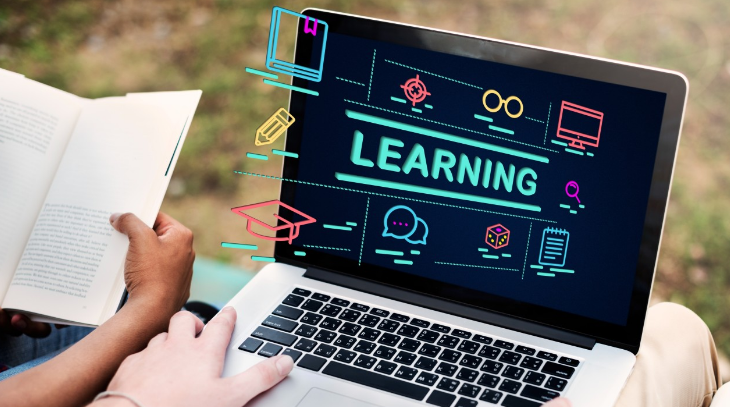
Technology has fundamentally transformed the landscape of lifelong learning. The emergence of online platforms enables learners to access education beyond traditional boundaries. Mobile applications further enhance this accessibility, allowing individuals to learn on-the-go. Additionally, virtual classrooms create global connections among diverse learners. Yet, the implications of these advancements raise questions about the future of skill development and autonomy. What challenges and opportunities lie ahead in this evolving educational ecosystem?
The Rise of Online Learning Platforms
As the digital age continues to evolve, the emergence of online learning platforms has transformed the educational landscape, making lifelong learning more accessible than ever before.
These platforms employ adaptive learning technologies, tailoring experiences to individual needs. Furthermore, they foster peer interactions, creating vibrant communities that enhance collaboration and knowledge sharing.
Such innovations empower learners to pursue freedom in their educational journeys, breaking traditional boundaries.
Mobile Learning: Education at Your Fingertips
While traditional education often confines learners to physical classrooms, mobile learning has emerged as a groundbreaking solution that places education directly in the hands of individuals.
Virtual Classrooms: Bridging Distance and Accessibility
Mobile learning has paved the way for innovative educational solutions, and virtual classrooms represent a significant advancement in this landscape.
These platforms foster interactive engagement, enabling learners to connect regardless of geographical barriers. By offering personalized learning experiences, virtual classrooms empower individuals to tailor their educational journeys, enhancing accessibility for all.
This evolution not only democratizes education but also nurtures a community of lifelong learners.
See also: Technology and Human Relationships
Continuous Skill Development Through Technology
Technology revolutionizes continuous skill development by providing diverse and dynamic learning opportunities.
Through platforms offering digital badges, individuals can transparently showcase their competencies, fostering motivation and engagement.
Moreover, skill assessments enable personalized learning pathways, allowing users to identify strengths and areas for improvement.
This innovative approach empowers learners, promoting autonomy and freedom in their educational journeys, ultimately enhancing professional adaptability in a rapidly evolving job market.
Conclusion
As technology continues to reshape lifelong learning, its impact is profound and far-reaching. Notably, a study revealed that 70% of learners reported improved engagement and retention through online platforms. This statistic underscores the effectiveness of digital education in fostering an interactive learning environment. By embracing these innovations, individuals are empowered to take ownership of their educational journeys, adapting their skills to meet the demands of an ever-evolving workforce. The future of learning is not just accessible; it is transformative.